
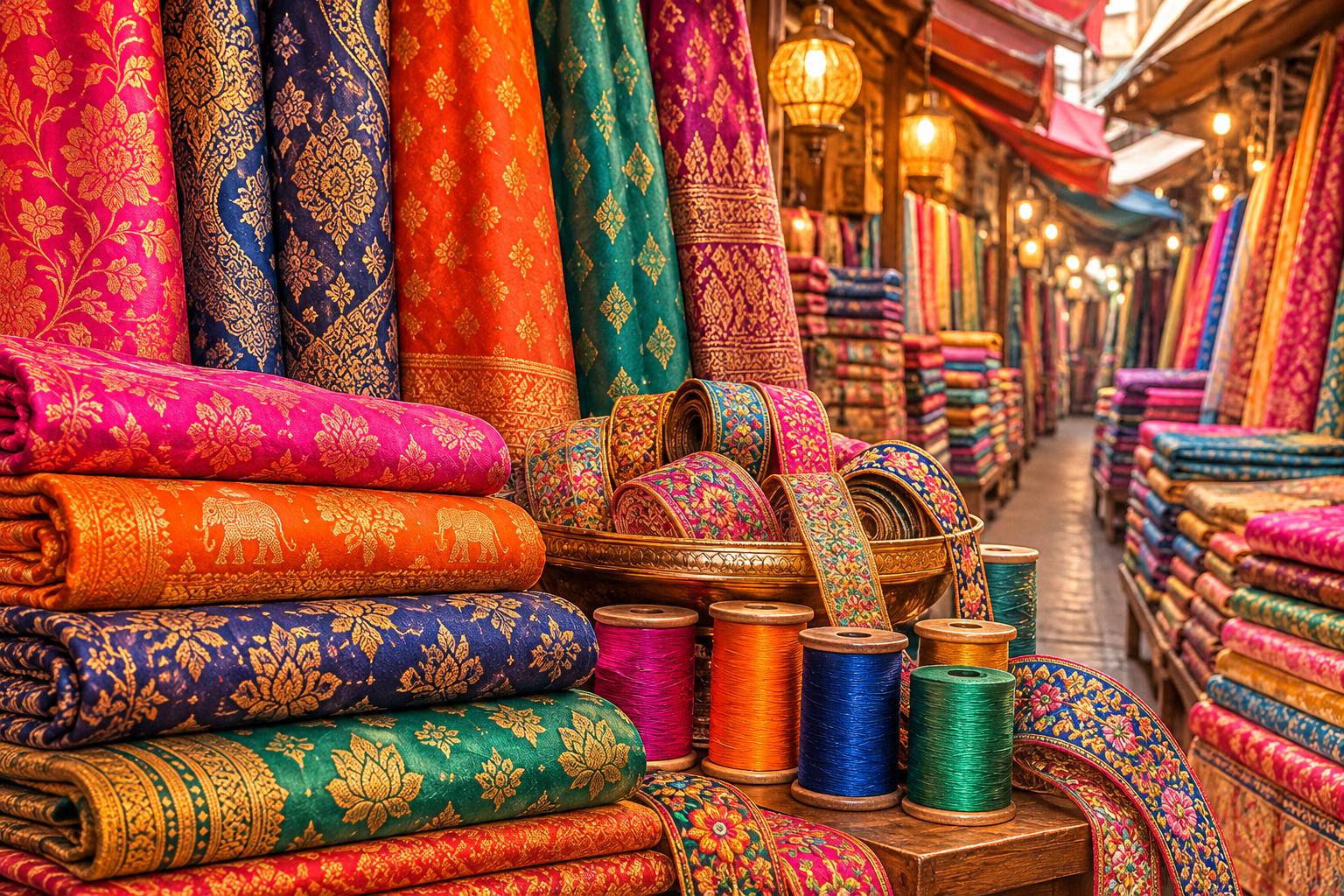
Bangkok shopping does not have to mean another mall. Around Phahurat (Pahurat) and the neighboring Sampeng lanes, you can browse cloth, trim, craft supplies and gifts in a district with a long history of trade and South Asian community life.
The best reason to visit is a specific project: fabric for a garment, ribbons for an event, buttons for a repair, or a useful souvenir. Come prepared with measurements and a little patience, rather than expecting every shop to sell the same items or have fixed online prices.
Phahurat versus Sampeng: what is the difference?
Phahurat is commonly called Bangkok’s Little India. The Tourism Authority of Thailand describes a neighborhood shaped by Punjabi and Sikh communities, with traders selling fabrics, garments, sari materials, accessories, spices and food. Nearby Sampeng is another historic shopping district, known for wholesale and retail commerce.
| If you want… | Start with… | Why |
|---|---|---|
| Sari fabric and Indian-style garments | Phahurat | The area’s textile and South Asian shopping concentration |
| Thai fabric and cloth for sewing | Phahurat–Sampeng material district | Specialist fabric retailers listed by Thailand’s Creative Economy Agency |
| Buttons, thread, lace, beads and craft tools | Soi Wanit 1 and nearby lanes | Numerous documented haberdashery and craft-supply businesses |
| Mixed small goods and accessories | Sampeng | The broader trading and wholesale market environment |
These are useful starting points, not a guarantee of stock. Individual shops can change their ranges, opening hours and minimum order quantities.
A shopping route you can adapt
1. Begin around Phahurat Road
Phahurat’s fabric and garment shops make a logical first stop when cloth is the main reason for your visit. Ask whether the seller prices fabric per metre or another unit, whether they cut small quantities, and whether the quoted price applies only to multiple pieces. Never assume a wholesale price applies to a single item.
The Tourism Authority of Thailand also highlights India Emporium and The Old Siam Shopping Plaza in its Phahurat cultural guide. Treat that guide as orientation rather than confirmation of every shop’s current tenant list or opening hours.
2. Explore the Sampeng–Phahurat material district
The public Creative Economy Agency guide identifies specialist shops around Soi Wanit 1 for ribbons, beads, buttons, sewing equipment, Thai textiles and printed cloth. Examples in its directory include:
- Vadee: ribbon, lace and decorative trimming supplies.
- Wee Beads by Jareon: beads and decorative components.
- Watana Chareon Button House: buttons, zips, threads and clothing accessories.
- Mon Thai Fabrics and Emchit Thai Fabrics: Thai textiles and fabric choices.
These are named examples from the agency’s published material, not independent firsthand shop reviews or a verified November 2026 stock inventory. Check each shop’s current address, availability and opening times before making a special journey.
3. Compare before buying
A similar-looking fabric may differ in fibre content, weight, weave, width and care requirements. Those factors are often more useful than choosing by appearance alone. Bring the measurements of the item you plan to sew and a photo or swatch for reference; ask permission before photographing a shop’s merchandise.
4. Keep time for nearby Sampeng
Bangkok Metropolitan Administration’s tourism website describes Sampeng as a major trading area close to Yaowarat and Phahurat. If your project needs extra findings or accessories, extend your walk there. The streets can be busy and narrow, so a comfortable bag, water and an unhurried schedule help.
What should you check when buying fabric?
- Material: Is it cotton, silk, polyester, blended or something else? Ask rather than guess from a label.
- Measurement: Confirm the price unit and the actual width and quantity you receive.
- Cutting policy: Some sellers may have minimum lengths or no returns on cut fabric; confirm before payment.
- Colour: Compare the fabric under available light and check whether a repeat purchase needs a matching dye lot.
- Care and transport: Ask about washing, colourfastness and packing if the material is delicate.
Is it worth visiting if you are not a tailor?
Yes, if you enjoy markets and have a reason to shop for a scarf, ready-made clothing, sewing accessories, gift materials or home crafts. The cultural setting is also part of the attraction. However, browsing a trading neighborhood is different from visiting a curated souvenir boutique: vendors focus on practical goods and wholesale as well as casual retail.
There is no need to buy anything to appreciate the neighborhood, but remember that these are working businesses. Avoid obstructing narrow entrances, ask before photographing people, and treat religious sites respectfully.
What about the Sikh temple?
The Tourism Authority of Thailand identifies Sri Guru Singh Sabha as an important religious and community landmark. If you choose to visit, check the temple’s current visitor rules and dress expectations directly, remove shoes where instructed, and remember that worship takes priority over sightseeing. It is not a commercial attraction.
How do you get there?
Phahurat is in Bangkok’s old-city shopping area. MRT Sam Yot is a practical transit starting point for the wider neighborhood; use a current transit map or navigation service for the walking route to your chosen shop. Access and travel times depend on the actual destination and conditions, so this article does not claim a fixed walking time or route.
For advance planning, refer to the Bangkok Metropolitan Administration’s Little India route and the Creative Economy Agency’s specialist-shop directory.
What will it cost?
There is no honest single price for “Phahurat fabric”: different shops sell different materials in different quantities. Prices, stock and promotions were not independently verified for this article. Decide your budget by the finished project’s needs, compare the unit price and inspect the actual product before buying.
A practical half-day idea
Pick one purpose, start with Phahurat’s textile area, explore a few shops listed in the material-district guide, and continue into Sampeng only if you still need supplies. Allow flexibility for lunch and browsing rather than treating every lane as a timed checklist. It makes the shopping more enjoyable—and more useful.
Information checked 22 November 2026 against official tourism and Creative Economy Agency material. Individual shop trading hours, inventory, prices and event schedules were not independently confirmed.